 In Tuesday’s post I talked about some changes you’ll have to make if you decide to modify your diet for GAPS. If you’ve read the full list of GAPS-legal/illegal foods, you know that you have to avoid things like breads, pasta, tortillas and cereal. To honor all the restrictions on the GAPS diet, however, you also need to avoid any foods that contain even small amounts of GAPS-illegal ingredients. To pull this off successfully you need to become a fanatical label reader.…
GAPS for Beginners Series: Becoming a Label Reader
Food Storage Tip: Plastic Lids for Canning Jars
 Writing yesterday’s post got me thinking about another tool that I find useful for food storage: white plastic lids for canning jars. I love these lids. For one thing, they are much more convenient for capping jars than the two-part canning lids. I know that that system is necessary for canning, but I mostly use my glass jars to store non-canned foods so I don’t like having to deal with the two-part lids.
Secondly, unlike most two-part canning lids, these white plastic lids do not contain BPA. I go out of my way to avoid BPA in the foods that we buy so it makes no sense to me to store my foods in something that may leech BPA.…
Food Storage Tip: Blue Tape Labels

Today I want to share a tool I use for making food storage easier. It’s simple and inexpensive, and if you’ve painted recently, you might even have some still lying around. Yes, I’m talking about blue painter’s tape.

I started using blue tape to hang posters and pictures in college. A few years ago I realized that blue tape would also work well for labeling containers of food. Since it’s designed to thoroughly stick but still be gentle on walls, it adheres to containers well but comes off easily and cleanly when you want to remove it.
I mainly use my blue tape labels to label containers of food before putting them in my freezer.…
GAPS for Beginners Series: Modifying Your Diet for GAPS
 In Friday’s post I discussed why you might consider trying the GAPS diet. If you’re interested in beginning to transition to GAPS, or even if you just want to learn more, an important first step is to familiarize yourself with what foods are allowed or avoided as part of the diet. (For short, I refer to these as GAPS-legal and GAPS-illegal foods.)
Check out the full list of legal/illegal foods here.
I know that list can be overwhelming in the beginning, so let me summarize the basic guidelines. Foods that must be avoided include: grains, starches (such as potatoes), most beans, all sweeteners except honey, unfermented dairy products, soy, and all other disaccharides and polysaccharides.…
How to Make Water Kefir
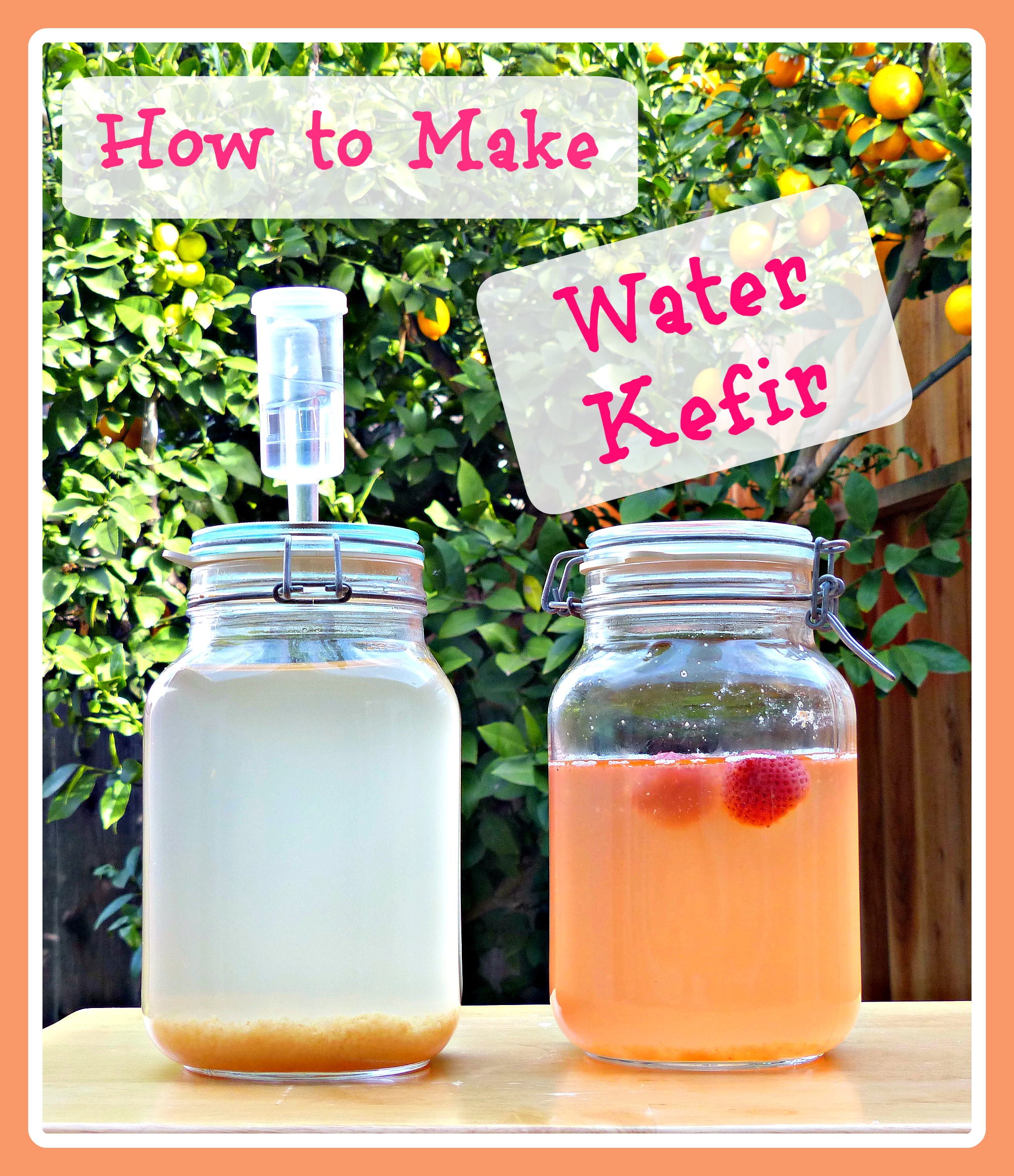
I love water kefir. Fruity, fizzy and slightly sweet, it adds a bit of variety to my largely water-dominated beverage choices.
If you haven’t tried water kefir before, I encourage you to do so! Making it requires a bit of time every two days but it’s an easy process that becomes complete routine after a little while.
Drinking water kefir is a great way to get more fermented foods into your diet. Like all raw fermented foods, water kefir is full of beneficial bacteria that are so essential to good health.
How to Find Water Kefir Grains
Water kefir is made with water kefir grains, symbiotic colonies of yeast and bacteria that consume sugar while producing good bacteria.…